We all know that when someone unexpectedly calls in sick or takes a day off, it affects productivity, team morale, and overall business operations. Deadlines become tighter, and your other team members are left juggling extra responsibilities.
Additionally, if you notice a pattern of frequent absences, it might be a sign that something deeper is going on—like burnout or dissatisfaction with the job.
Effective absence management can help you tackle these challenges head-on! By getting a handle on PTO, you keep projects on track, show your employees that you genuinely care about their well-being, and even save some cash on temporary staffing and overtime costs.
In our free guide, we provide you with actionable strategies to enhance your approach to:
- Absenteeism, presenteeism, and tardiness which are critical factors affecting workplace culture and employee relations. We’ll talk about the habitual absence of an employee from work, being chronically late, and working while facing health issues, stress, or other distractions, as all three lead to decreased performance and disrupt team dynamics and project timelines.
- Tracking employee attendance, which is vital for understanding leave patterns and identifying potential issues within the workforce. We’ll discuss various approaches to absence tracking, including manual methods (like spreadsheets) and automated systems, such as HR or work scheduling software. Additionally, we’ll cover best practices for documenting PTO, maintaining confidentiality, and ensuring compliance with labor laws.
- Developing an effective absence management policy that aligns with organizational goals while supporting employee needs. We’ll outline clear guidelines regarding attendance expectations, procedures for reporting absences, and consequences for excessive absenteeism. We’ll also address accommodations for legitimate absences due to medical conditions or personal circumstances.
- Using absence tracking systems designed to simplify leave management. We’ll explain how such software can reduce administrative burdens on HR teams and provide valuable insights to leads and managers. Additionally, we’ll discuss the integration of absence tracking systems with other HR functions, such as payroll and performance evaluation.
And there’s one more point: nothing beats a downloadable PDF when it comes to guides. Why, you ask?
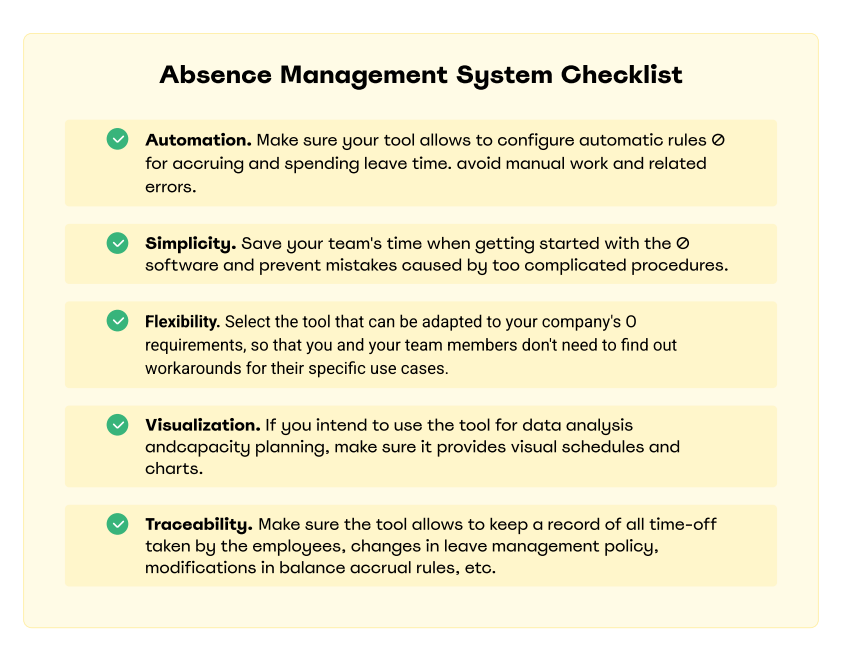
First off, our PDF is packed with awesome visuals like infographics and schemes. They make complex ideas much easier to understand and remember and help to break up all that text. Just share one of our schemes on social media or add it to a presentation for the team, and enjoy!
Another great thing about it is convenience. You can easily download our guide on your device and access it whenever you need it. No more scrolling through endless web pages or trying to remember where you found that one article. And of course, it is super easy to share! Want to pass along some knowledge to your friends or colleagues? Just send them the PDF with a quick message.
Lastly, having a guide in PDF format means you can take it anywhere—whether you’re on your couch, at a coffee shop, or even on a road trip. You don’t need an internet connection to access your favorite resources, which is a total game-changer.
Dispelling Your Final Doubts
Still not sure if you need the guide? Then let’s check your employee absence management efficiency by looking at three key areas—approach, communication, and policy. By evaluating these elements, you can identify areas for improvement and ensure that your organization is set up for success.
The approach you take towards absence management reflects your organization’s culture. A supportive and understanding approach fosters a positive work environment, encouraging employees to be honest about their absences without fear of repercussions. And your ability to be proactive rather than reactive allows for prevention and early intervention, which leads to better employee engagement and reduces absenteeism.
Ask yourself:
- Are there programs in place to support employees dealing with personal issues that may lead to absenteeism (e.g., mental health resources, flexible work arrangements)?
- How does management demonstrate empathy and understanding towards employees’ situations?
- What proactive measures are being taken to identify patterns of absenteeism before they become problematic?
- Are there regular check-ins or wellness programs that promote employee well-being?
- Do managers understand the importance of addressing absenteeism in a way that promotes trust and openness?
Next is communication. Open dialogue encourages employees to discuss their needs and challenges, leading to a better understanding of the reasons behind absences and helping to identify any underlying issues that may need to be addressed. Besides that, keeping lines of communication open fosters a sense of belonging and makes people more committed to their roles and less likely to take unnecessary absences.
Check the following:
- Is the information about absence management practices in place communicated to employees? Is it done through multiple channels (e.g., emails, meetings, intranet)?
- Are new hires oriented on these practices during onboarding?
- How transparent is the organization about absenteeism trends and their impact on the workplace?
The policies, in turn, ensure that all employees understand the rules regarding absences. This helps maintain consistency in how absences are managed and ensures that all employees are treated fairly, reducing potential grievances.
Make sure that:
- The absence management policy is clearly documented and easily accessible to all employees.
- The policy is reviewed and updated to reflect changes in laws or organizational needs.
- There are mechanisms in place to ensure that the policy is applied consistently across all departments and levels.
If you’ve reflected on these three areas—approach, communication, and policy—and identified potential gaps in your absence management system, our guide is here to help!
Alternatively, you can check out our blog post on the related topics: