Flexible and hybrid work models give employees the freedom to decide when, where, and how they want to work, making them feel more comfortable and engaged. Sounds like a recipe for increased productivity and morale, right?
Studies soon found that the rise in remote work also contributed to heavier workloads, presenteeism, and work performed beyond the established hours.
Leave requests have followed the same pattern. In 2024, 57% of employers reported a rise in the number of leave requests they received, according to SHRM. That makes a reliable absence tracking solution less of a nice to have and more of a necessity for staying ahead of overtime, burnout, and compliance risk.
In this post, we cover what an absence tracking solution actually does, the different ways businesses track absences, how to choose the right one for your team, and a comparison of 13 free and paid absence tracking solutions from the top of Google.
- What Is an Absence Tracking Solution?
- Why Absence Tracking Matters
- Types of Absences to Track
- Types of Absence Tracking Methods
- How to Choose an Absence Tracking Solution
- Quick Look: 13 Absence Tracking Solutions Compared
- Free Absence Tracking Solutions
- Paid Absence Tracking Solutions
- FAQ
- Conclusion
What Is an Absence Tracking Solution?
An absence tracking solution is software that records when employees are off work, whether for vacation, sick leave, or other approved time away, and gives managers a clear, real time view of who is available on any given day. Most absence tracking solutions combine three things: a way for employees to request time off, an approval workflow for managers, and a shared calendar or report that shows team availability.
This is different from a basic time and attendance system, which focuses on clock in and clock out times for hourly staff. An absence tracking solution is built around planned and unplanned time away from work, including leave balances, accrual rules, and coverage planning. Some tools in this comparison, like Jibble and Workyard, lean more toward attendance and clock in tracking, while others, like actiPLANS and LeaveBoard, are built specifically around leave and absence management. We have included both types since most teams end up comparing them side by side.
Why Absence Tracking Matters
For a start, let’s take a close look into why keeping tabs on attendance can really help your business run smoother and keep your team happy:
- Encouraging employees to take ownership of their attendance and establishing clear expectations promotes transparency and allows you to ensure that everyone is contributing fairly while still enjoying a healthy work-life balance.
- Incorporating attendance tracking into your workforce management strategy significantly elevates productivity levels. This is particularly effective when you pair an attendance tracker with other productivity tools; it gives you a clearer picture of who’s working hard and who might need a bit of help.
- For organizations operating in sectors with stringent labor regulations, monitoring employee attendance helps ensure that you’re following all the rules about overtime and comply with local, state, and federal regulations.
- For roles that are shift-based, accurately tracking attendance is essential for efficient payroll processing.
- Regularly monitoring attendance can help identify early signs of burnout and disengagement. For example, if an employee frequently arrives late, leaves early, or calls in sick often, these behaviors may signal a need for intervention.
Types of Absences to Track
Not all absences are the same, and a good absence tracking solution should account for the differences. Most fall into four categories:
- Health related absences. Sick days, medical appointments, and longer term medical leave.
- Planned absences. Vacation, personal days, and other time off requested and approved in advance.
- Family and caregiving absences. Parental leave, bereavement, and time off to care for a family member.
- Unplanned or unauthorized absences. Last minute call ins, no shows, and absences without an approved request.
Tracking these separately matters. A team with a high rate of unplanned absences has a different problem, and needs a different fix, than a team simply using its full vacation allowance. This is where a dedicated absence tracking solution earns its keep over a generic spreadsheet: it can break down absence data by type and surface patterns a flat sign in sheet never will.
Types of Absence Tracking Methods
Though we live in a technological era, when it comes to keeping track of who’s in, who’s out, and who’s on approved leave, there are quite a few methods to choose from, each with its strengths and weaknesses.
By understanding the various options available, you can make an informed decision that will keep your workforce accountable and engaged.
- Manual Trackers. This (old-school) approach involves using physical tools like sign-in sheets or time cards to record attendance. While it’s straightforward and doesn’t require any fancy technology, it does have its downsides. Manual methods are prone to errors, and there’s always the risk of manipulation, whether intentional or accidental.
- Spreadsheets. Tools like Microsoft Excel are still a favorite for many businesses because they offer flexibility and ease of use. You can create customized attendance sheets to track not just presence but also absences, tardiness, and leave requests. However, while spreadsheets can be a great way to organize data, they do require regular updates and can become unwieldy as your team grows.
- RFID Systems. With Radio Frequency Identification systems, your employees carry badges or tags that are scanned when they enter or exit the workplace. This method is quick and efficient but requires a significant initial investment.
- Biometric Systems. By using unique biological traits—like fingerprints or facial recognition—these systems ensure that attendance is recorded accurately. The downside? Some employees claim to feel uncomfortable with the idea of their biometric data being collected, and there can be concerns around privacy.
- Online/Cloud-Based Solutions. These systems allow employees to clock in and out from anywhere with an internet connection. However, relying on internet connectivity means that you need a reliable network to avoid disruptions.
- GPS-Based Trackers. This method uses mobile devices to monitor location and attendance, ensuring that you have accurate records of where your employees are working from. While this is fantastic for mobile teams, it may raise concerns about privacy and constant monitoring.
- Specialized Attendance Software. These platforms automate much of the tracking process, including PTO requests, work status and location tracking, and work planning. They save time and reduce errors without any stress or discomfort for employees. However, the initial setup and ongoing costs can be a consideration for smaller businesses.
- Human Resource Management Systems. These comprehensive software solutions are designed to streamline and automate various HR functions and help organizations manage their workforce more effectively by centralizing employee data. Tracking within HRMS may include not just monitoring employee attendance, integrating seamlessly with payroll systems, but also real-time tracking, leave management, and detailed reporting. While these systems enhance accuracy and efficiency, smaller businesses may need to consider the initial setup and ongoing costs.
How to Choose an Absence Tracking Solution
While you might have every right to prefer the simplicity of manual tracking methods, the remaining part of our blog post will be devoted to technology. We’ll focus on finding the right absence tracking solution for your business.
If you were to ask ChatGPT for advice on this topic, you’d probably get some basic tips about assessing your business needs and picking a user-friendly solution. But we’re here to dig a little deeper.
First of all, when you decide to purchase an absence tracking solution, it usually means you’re facing a challenge.
Maybe your company has grown, and your HR team is stretched thin, trying to keep tabs on who’s working from where. Or perhaps you’re dealing with a slew of scheduling conflicts due to unexpected absences. Whatever the reason, it’s not just about business needs; it’s about addressing a real challenge that’s affecting your operations.
The next tip is usually about the budget. Sure, everyone talks about how much they can spend, but in fact, it’s all about impact. The challenge you’re facing is likely causing issues you don’t want—think profit losses, legal disputes, or just general chaos in your workplace. So, when evaluating your options, consider how much these problems are costing you.
Now, let’s talk features. You can’t go anywhere without them! But here’s the kicker: it’s not features you need right now; it’s also about what you don’t need (at least not yet). Nobody wants to pay for bells and whistles they’ll never use. And don’t forget to think ahead—are there features you might want to add later as your business evolves?
Implementation difficulty is another crucial factor, and it goes far beyond the user-friendly interface. Think about your employees. Do they have tech knowledge? Are they all using computers? If not, you’ll need a system that’s easy for everyone to adopt, regardless of their tech-savviness.
Last but definitely not least are the risks involved. Data security is paramount—after all, you don’t want sensitive employee information floating around unprotected. Also, check for support availability. If something goes wrong (and let’s be honest, it often does), you’ll want a reliable support system in place to help you out.
So, here’s our experience based recipe for choosing the right absence tracking solution:
- Identify the Challenge: Understand what specific problem you’re trying to solve.
- Evaluate the Impact: Consider how this challenge affects your business—financially and operationally.
- Include and Exclude Features: Make a list of must-have features and those you can live without (for now).
- Check for Availability: Ensure that the features you want are available in the solution you’re considering.
- Understand Implementation Challenges: Think about how easy it will be for your team to adopt the new system.
- Estimate the Risks: Assess data security measures and support options.
Quick Look: 13 Absence Tracking Solutions Compared
Before the full breakdown, here is how all 13 free and paid absence tracking solutions in this guide stack up on price and fit.
| Solution | Free Plan | Paid Plan Starts At | Best For |
|---|---|---|---|
| actiPLANS | Free for 1 to 3 users | $1.2 per user/month | Teams that need leave management and location scheduling together |
| greytHR | Free version with limited functionality | ₹3495 per month | Companies in India and the Middle East |
| TIMEOFF.GURU | Free for up to 10 users | €1 per user/month | Simple leave tracking with calendar sync |
| Zoho People | Free for up to 5 users | €1.25 per user/month | Teams already using Zoho One |
| LeaveBoard | Free for up to 9 users | $1.35 per user/month | Small and medium sized businesses |
| Time Off Cloud | Free for personal use | $17.85/month + $0.85/user | Companies with simple, full day leave policies |
| Jibble | Free for unlimited users | Free forever | Teams that want facial recognition and GPS clock ins |
| PARiM | Free trial only | $55 per month | Hourly and temporary staff |
| Calamari | Free trial only | $2 per user/month | Teams using Slack, Jira, or Google Workspace |
| TimeTrex | No free plan | $30 per month | Field workers and mobile crews |
| citrusHR | Free trial only | £3 per employee/month | Small businesses without an HR department |
| clockster | No free plan | Pricing not published | Frontline and shift based teams |
| Workyard | Free trial only | $6/user/month + $50/month base fee | Construction crews |
Free Absence Tracking Solutions Compared
| Attendance Tracker | Type | Tracking | Employee Self-Service | Mobile Access | Analytics |
|---|---|---|---|---|---|
| actiPLANS | Cloud-based absence management and work scheduling system | Work status and location tracking, leave management, calendar integration | Yes | Yes | Reports on attendance and leave usage |
| greytHR | HRMS | Biometric and in-app | Leave requests and check-ins only | Yes | A part of other HR insights |
| TIMEOFF.GURU | Cloud-based leave management software | Staff availability tracking based on PTO data | Yes | Yes | Yes |
| Zoho People | HRMS | Clock in, clock out | Yes | Yes | Advanced HR analytics |
| LeaveBoard | Cloud-based leave management software | Staff availability tracking based on PTO data | Yes | Yes | Absence reports only |
| Timeoff Cloud | Cloud-based leave management software | Staff availability tracking based on PTO data | Yes | Mobile-friendly interface, but no separate app | Absence reports only |
| Jibble | GPS-tracker | Clock in, clock out | Yes | Yes | Yes |
1. actiPLANS
Key features:
- Leave request management
- Team calendar
- Flexible PTO settings
- Mobile app
- Reports
- Location tracking
- Automated notifications
actiPLANS is a free absence tracking solution that works for large and small businesses alike. It provides a leave management interface where every user can review their time off balances, update their absence status, and review the availability of their colleagues.
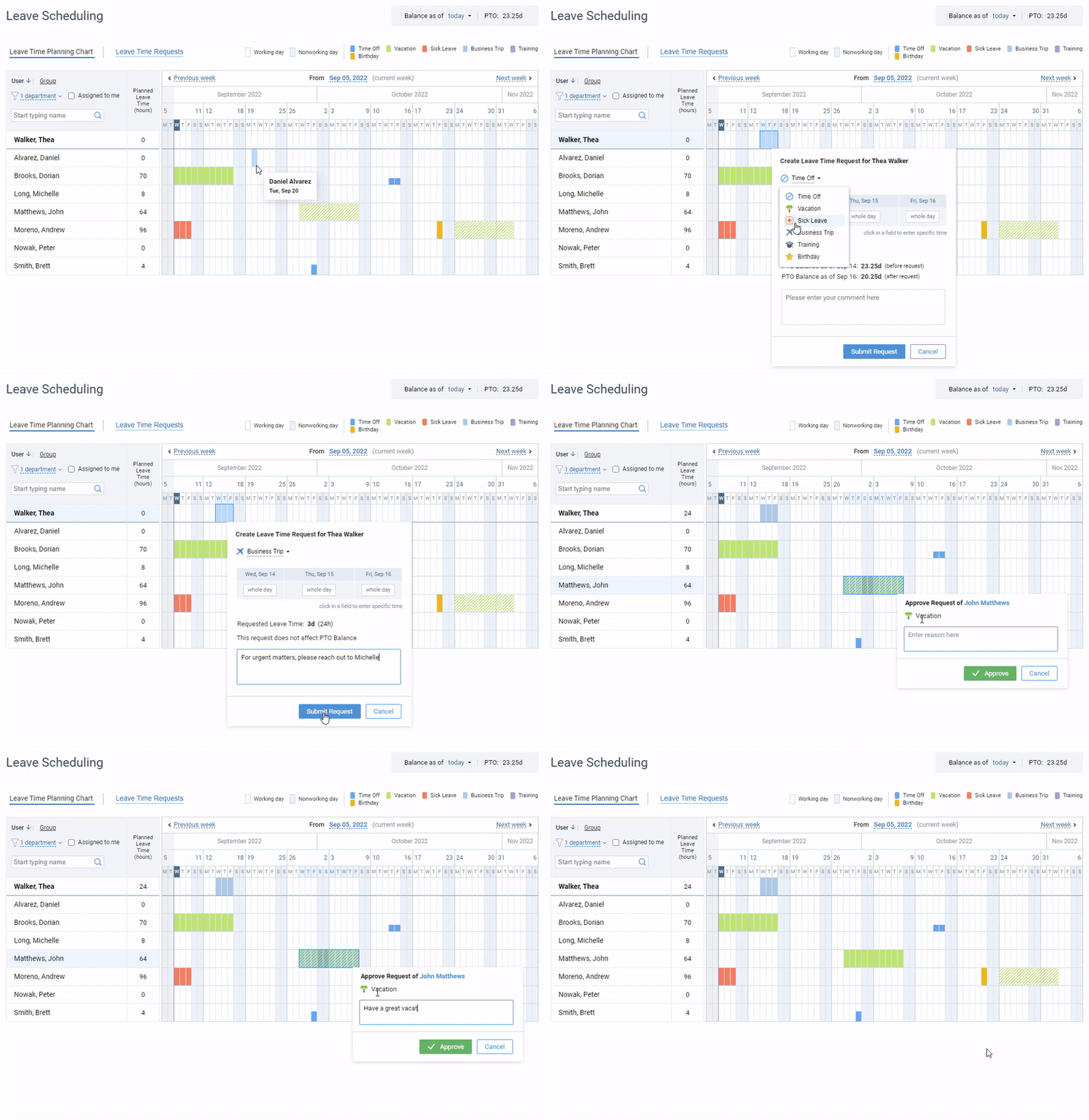
Leave management in actiPLANS – create an unlimited number of leave types, get your team to request and plan their time off, and review employee availability.
In actiPLANS, managers can create unlimited custom leave types, set bespoke leave accrual rules, edit individual and company work schedules, process leave requests, change user permissions, and more.
If any employees work in shifts or travel a lot, managers can also activate the Locations interface and schedule employee shifts or locations on a visual timeline.
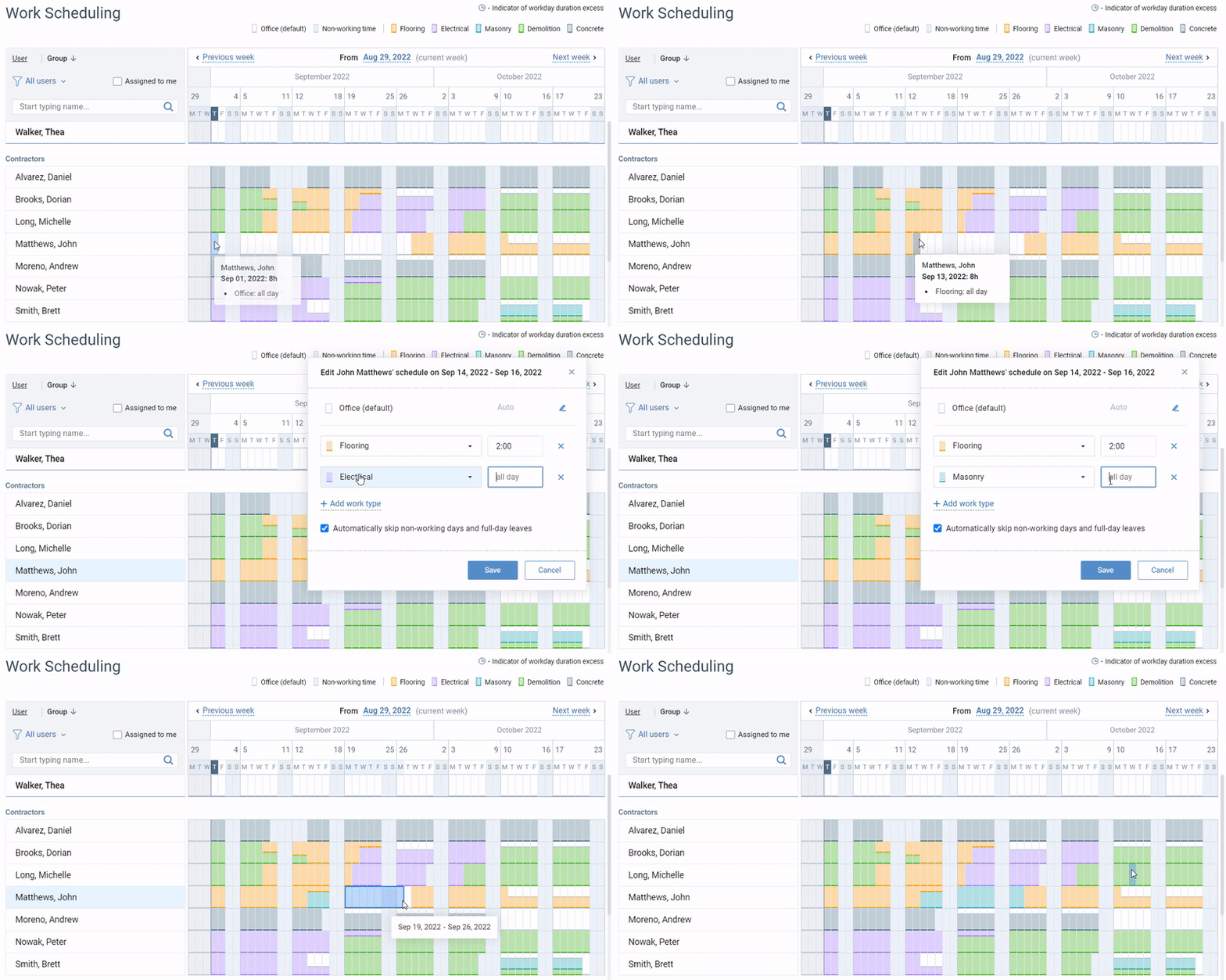
Shift scheduling in actiPLANS – create custom shift types, put them on the timeline, automatically notify everyone of the schedule changes, and review work statistics.
HR managers can use actiPLANS to identify absenteeism and burnout cases, calculate HR metrics, and track human resources in terms of their loyalty, responsibility, and productivity.
Accountants also benefit from actiPLANS. They can review attendance analytics, adjust PTO and sick leave balances across users if necessary, and build leave reports, which help them calculate accurate compensations.
Finally, everyone gets a free mobile app where they can request leave time on the go, book vacation dates, review peer availability, and notify others about running late or leaving early. Plus, whenever someone’s availability status changes, everyone gets notified automatically.
What sets actiPLANS apart is its flexibility. As your business evolves, you can seamlessly upgrade your attendance tracking capabilities with additional features such as time tracking, payroll management, and more. This is made possible through integrations with popular tools like actiTIME, QuickBooks, and other applications via Zapier. With these you’ll enhance your attendance system without the hassle of switching platforms or undergoing complex setups.
Integrations:
- actiTIME
- iCal
Pros:
- Highly flexible settings
- Frequent software updates and new releases
- One of the most cost-effective solutions on the market
Cons:
- Limited integration options
- Mobile app only has leave tracking functionality
Pricing:
- Free 30-day trial
- Free version for 1-3 users
- Paid plans start at $1.2 user/month
2. greytHR
Key features:
- Custom leave types
- Leave request management
- Shift management
- Holiday lists
- Reports
- Mobile apps
greytHR is a free attendance tracker with a robust set of features. It’s mostly suitable for companies from India and the Middle East as it guarantees HR compliance only in these regions.
greytHR is a complex HR suite with attendance tracking functionality. Managers get to create custom attendance policies, specify leave types, their approval processes and accrual rules, and more.
Leave requests in greytHR can be managed either automatically or manually. You may also like to explore other software interfaces, including shift management and reporting, which will help you calculate payrolls and compensations.
Pros:
- Praised for the ease of use
- Convenient payroll process
Cons:
- Reported problems with customer support
- Login issues + automatic logout
Pricing:
- Free 7-day trial
- Free version with limited functionality
- Paid plans start at ₹3495 per month
3. TIMEOFF.GURU
Key features:
- Leave request management
- Team calendar
- Reports
- Mobile apps
TIMEOFF.GURU is a free attendance system that provides basic leave management functionality. These include custom leaves, leave request management, and analytics.
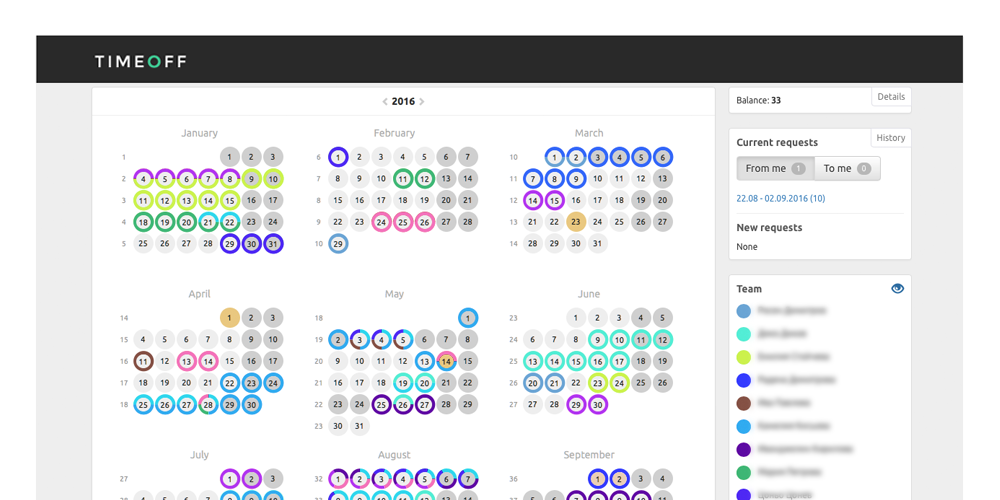
With the native mobile app, users can manage their time off and managers can approve or reject their leave requests. More than that, you get Outlook and Google Calendar integration, which allows you to update your calendar with the software data.
Pros:
- Simple to use
- Great substitute for spreadsheets
Cons:
- Lacks other essential HR management functionality (like shift scheduling, etc.)
- Limited integration options
Pricing:
- Free 14-day trial
- Free version for up to 10 users
- Paid plans start at €1 per user/month
4. Zoho People
Key features:
- Leave approvals
- Attendance kiosk
- Shift scheduling
- Reports
Zoho People is a reliable employee attendance tracker for growing teams and businesses. It ensures leave policy compliance, grants access to employee attendance history, and provides a native mobile app for managing leave requests.
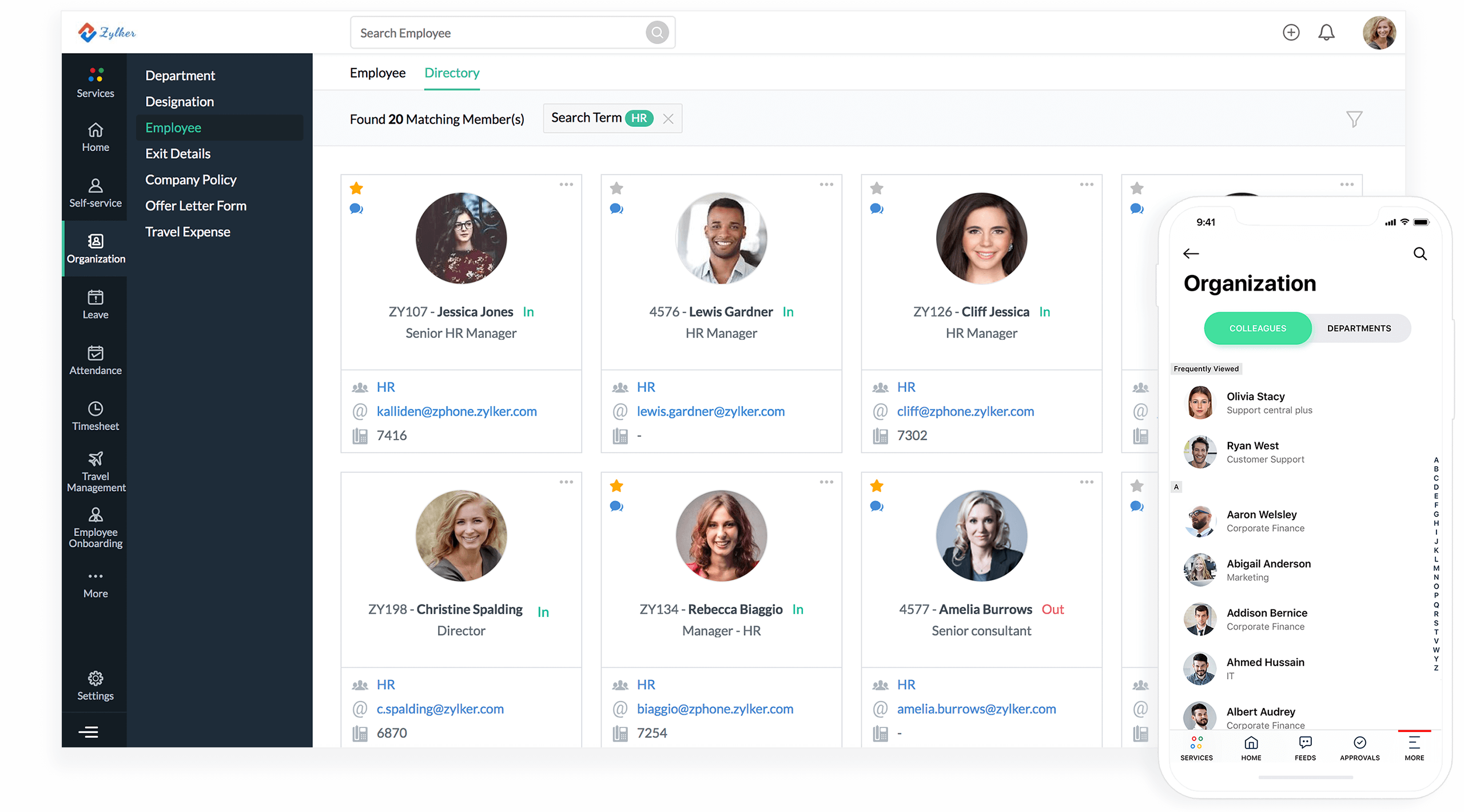
The software lets you create custom leave policies, set up policy restrictions, create a holiday calendar, and review team availability in an online team calendar.
Zoho People is a part of Zoho One – an integrated business system for agile organizations. Unlike most other tools in this list, it is an established piece of software that boasts functionality, accuracy, and stability.
Pros:
- Comprehensive feature set (in paid plans)
- Ease of use
Cons:
- Poor customer support
- API limitations
Pricing:
- Free 30-day trial
- Free version with basic HR functions for up to 5 users
- Paid plans start at €1.25 per user/month
5. LeaveBoard
Key features:
- Time off calendar
- Employee portal
- Flexible leave policies
- Reports
LeaveBoard is a free attendance tracker for small and medium-sized businesses. It features a team calendar displaying employee attendance, leaves, and holidays.
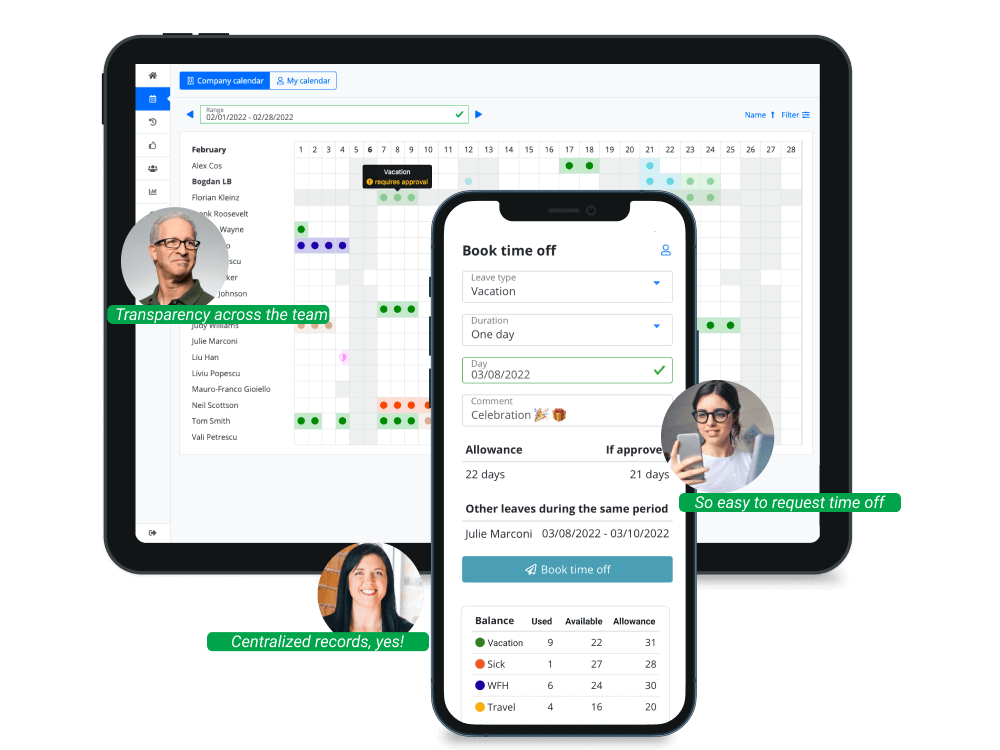
You can create new leave types, balance accrual rules, company holidays, allowance rates per employee, and more. With LeaveBoard, you can also review data in real time, restrict user access to data and system settings, synchronize leave data with a calendar, and manage attendance on the go with a mobile app.
Pros:
- Simple to use
- Good value for money
Cons:
- The interface could be more intuitive
- Slack integration fails sometimes
Pricing:
- Free version for up to 9 users
- Paid plans start at $1.35 user/month
6. Time Off Cloud
Key features:
- Leave request management
- PTO management
- Calendars
- Reports
Time Off Cloud is an HR management solution with the same old attendance tracker functionality: time off request management, a few PTO accrual modes to choose from, and a visual team calendar.
Unlike other solutions, Time Off Cloud will only serve best for companies with simple and inflexible attendance policies as that software supports only full-day leave management. In other words, you can’t take a few hours off in the software and your leave balances won’t be adjusted in cases like these.
Pros:
- Easy to use
- Employee self-service
- Flexible settings
Cons:
The functionality is basic
Pricing:
- Free 14-day trial
- Free version for personal use
- Paid plans start at $17.85 per month + $0.85/user
7. Jibble
Key features:
- Facial recognition
- Location tracking
- Real-time reports
- Mobile and kiosk access
- Leave management
- Reminders and alerts
Jibble is a completely free attendance tracker that combines ease of use with smart automation. Whether your team is remote, on-site, or a mix of both, employees can easily clock in and out via mobile app, desktop, or a shared kiosk, making it ideal for flexible work environments.
What sets Jibble apart is its built-in facial recognition and GPS tracking, which prevent buddy punching and ensure attendance is accurately logged. With geofencing, you can restrict clock-ins to approved locations, giving managers better control over attendance data. Alongside attendance tracking, Jibble also offers leave management, allowing managers to approve requests quickly and keep accurate records of time off. With real-time visibility, automated timesheets, and one-click exports, Jibble simplifies attendance and payroll management—all in one intuitive platform.
Pros:
- Free for unlimited users
- Comprehensive feature set including face recognition and GPS tracking
- Easy to use
Cons:
- Lacks shift scheduling
Pricing:
- Free plan with core attendance features for unlimited users
Paid Absence Tracking Solutions Compared
| Attendance Tracker | Type | Tracking | Employee Self-Service | Mobile Access | Analytics |
|---|---|---|---|---|---|
| PARiM | Comprehensive attendance tracking, scheduling, and time-off management platform | Clock in, clock out | Yes | Yes | Yes |
| Calamari | Geofencing-based tracker | Clock in, clock out | Yes | Yes | Leave usage reports |
| TimeTrex | Workforce management system | Clock in, clock out | Yes | Clock in, clock out | Attendance, labor costs, and scheduling efficiency |
| citrusHR | HRMS | Staff availability tracking based on PTO data | Yes | Limited | Leave usage reports |
| Clockster | GPS-tracker | Clock in, clock out | Yes | Yes | Basic |
| Workyard | GPS time tracker | Clock in, clock out | Yes | Yes | Labor costs oriented reports |
1. PARiM
Key features:
- Custom leave types
- Absence calendar
- Shift management
- Reports
PARiM is perfect for managing hourly workers and temporary staff. It is flexible in terms of leave tracking as it allows for tracking absences by hours, days, and accrued percentages.
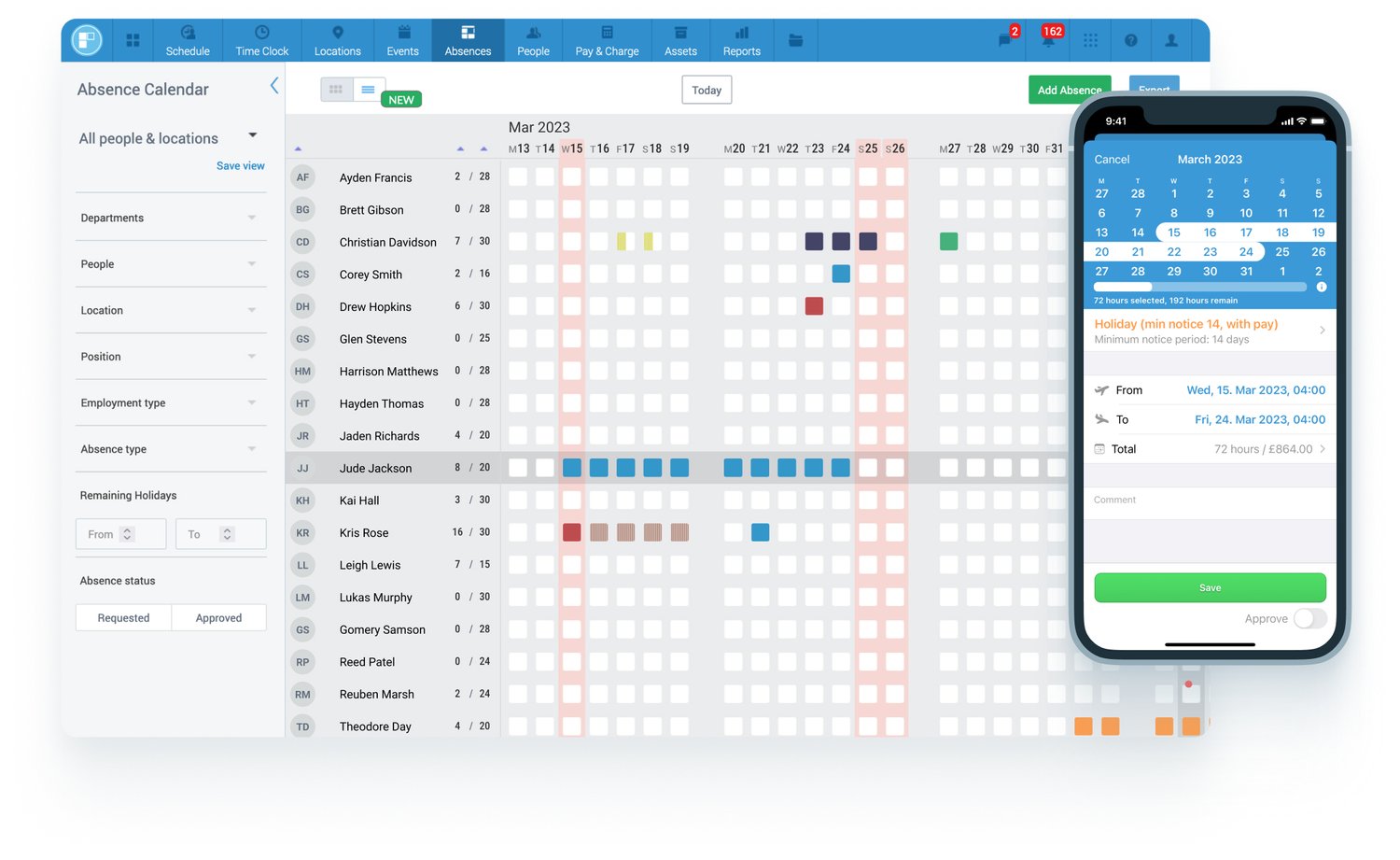
You can create custom leave types and track them on an online team schedule. Mobile apps are powerful enough to allow users to manage their leaves on the go.
The only unpleasant thing you need to be aware of about PARiM is that some of its essential features come with additional costs.
Pros:
- Comprehensive feature set
- Additional modules for event management, asset tracking, etc.
Cons:
- Not flexible enough
- Reported problems with customer support
Pricing:
- Free trial
- Plans start at $55 per month
2. Calamari
Key features:
- Custom leave types
- Leave request management
- Calendars
- Work schedules
- Notifications
Calamari is employee attendance tracking software that boasts Google Apps, Slack, and Jira integrations.
It displays employee attendance on a single team calendar: you can review leaves, remote work statuses, and any other custom leaves or statuses that serve your company’s needs.
The software also allows you to automate attendance-related routines by specifying policy rules, leave balance calculation rules, multi-level approval processes, and more.
For the most accurate attendance records, you can get your team to use Calamari as a clock-in and out tool: all they need is to use Bluetooth iBeacons, QR codes, a web browser app, mobile apps, or Slack.
Pros:
- Simple to use
- Cost-effective
Cons:
- Initial configuration may take some time
Pricing:
- Free 14-day trial
- Plans start at $2 per user/month
3. TimeTrex
Key features:
- Biometric facial recognition
- Mobile access
- Automated accruals
- Flexible scheduling
- Payroll
Instead of juggling multiple systems for payroll, time and attendance, scheduling, and HR management, you can have it all in one place with TimeTrex. Besides, this cloud-based solution can be accessed from anywhere and anytime.
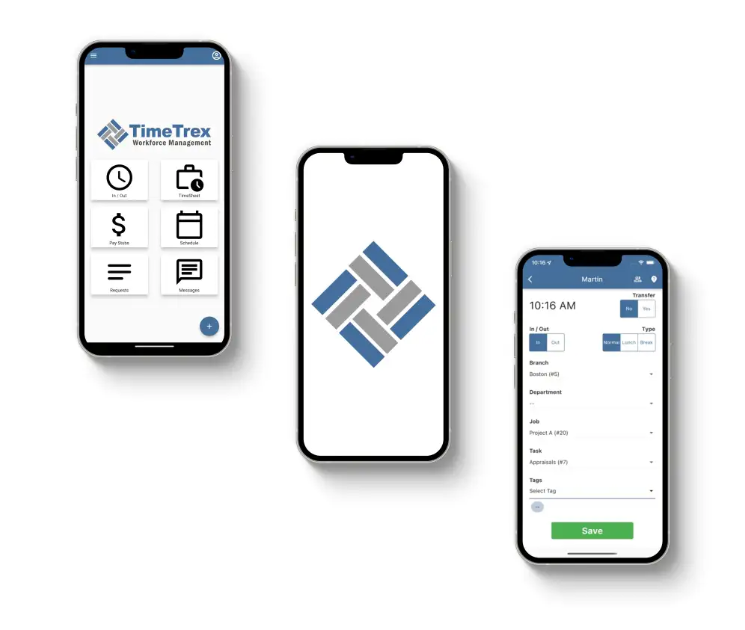
TimeTrex allows you to keep tabs on employee attendance without a hitch. It has a super slick time clock feature that lets employees punch in and out with just a click or a selfie. Plus, thanks to geolocation tracking, you can make sure your crew members are where they need to be without having to play detective.
TimeTrex’s employee scheduling functionality lets your team members swap shifts and request time off without breaking a sweat. And on top of that, all this data feeds into some pretty neat reports, making payroll a breeze.
Pros:
- Excellent for field workers, construction teams, and mobile workforce
- Comprehensive feature set
Cons:
- Reports may feel cumbersome
Pricing:
- Plans start at $30 per month
4. citrusHR
Key features:
- Employee database
- Absence management
- Staff calendar
- Payroll
citrusHR is geared towards small and medium-sized businesses that might not have the time or resources to deal with complex HR issues or to maintain a full HR department. With its help, managing employee data, tracking absences, organizing payroll, and even navigating the tricky waters of employment law becomes much simpler.
citrusHR features an intuitive staff calendar that keeps everyone in the loop about who’s in or out and reduces the back-and-forth emails as you’re trying to figure out when’s the best time for that all-important team meeting.
On top of that, the software offers straightforward online timesheets that help keep tabs on those billable hours for client projects and verify if everyone’s putting in the time they should.
Pros:
- Promotes legal compliance
- Intuitive design
Cons:
- Steep learning curve
- HR Support services are limited to the UK region
Pricing:
- Free 14-day trial
- Plans start at £3 per employee/month
5. clockster
Key features:
- Mobile clock-ins
- Shift reminders
- Geofencing
- Shift swaps
- Task checklists
- Shift templates
Clockster makes sure that checking in and out is just a tap away for employees, and managing those hours is a breeze for employers. It saves time by cutting down on those mundane admin tasks that nobody really likes to do. Moreover, it’s smart enough to adapt to various business needs, whether you’re a cozy café or a bustling retail chain.
Clockster’s attendance tracking functionality allows managers to see who’s clocked in and out in real time. It even integrates with biometric systems for that extra layer of accuracy.
In addition, it offers a streamlined shift scheduling feature that enables you to create and manage shifts with ease. As for employees, they can swap shifts directly through the app and get notified about upcoming shifts, which removes the need for constant back-and-forth team communication on administrative matters.
Pros:
- Perfect for frontline workers (i.e., waiters, shop assistants, etc.)
- Boost efficiency
- Guided onboarding process
Cons:
- Users report frequent bugs (e.g., imprecise geo-tracking, login issues, etc.)
Pricing:
- No information available
6. Workyard
Key features:
- GPS Time Clock
- Automatic Time Tracking
- Project Time Tracking
- Employee & Supervisor Controls
- Time Card Audits
- Mileage & Travel Time Reporting
Workyard is designed to streamline time tracking and job costing for the construction industry. By combining GPS tracking with automatic clock-ins and easy payroll integrations, it eliminates manual time entry and ensures your labor costs are always accurate.
With Workyard, supervisors gain full visibility into crew locations, mileage, and project progress, all in one app. The platform also automates tasks like payroll processing, saving you time and reducing errors in client billing.
Pros:
- Accurate GPS Tracking: Ensures precise payroll and job costing.
- Automates Time Management: Saves time by automating time card entry and project cost tracking.
- Streamlined Payroll: Integrates directly with payroll systems for one-click processing.
Cons:
- Geofencing Required: Geofencing is necessary for accurate location tracking, which may limit flexibility for some projects.
Pricing:
- Starts from $6 per user/month + $50/month company base fee
- Free trial
FAQ
What is the difference between an absence tracking solution and a time and attendance system?
An absence tracking solution focuses on planned and unplanned time away from work: leave requests, approvals, balances, and coverage. A time and attendance system focuses on clock in and clock out times for hourly staff. Some tools, like actiPLANS and LeaveBoard, are built primarily for absence tracking. Others, like Jibble and Workyard, are built primarily for attendance and blend in basic leave tracking. Check which problem you are actually trying to solve before you compare tools.
Is there a truly free absence tracking solution?
Yes. Several tools in this guide, including actiPLANS, TIMEOFF.GURU, Zoho People, LeaveBoard, and Jibble, offer a free tier rather than just a free trial. Most free tiers cap the number of users (often 1 to 10) or limit which features are available, so check the fine print against your team size before committing.
How much does an absence tracking solution cost?
Paid plans in this comparison range from about $1 to $3.50 per user per month for leave focused tools, up to flat monthly fees of $30 to $55 for more comprehensive workforce management platforms. Price generally depends on how many modules you need beyond basic leave tracking, such as scheduling, payroll, or GPS based attendance.
Can an absence tracking solution help with compliance?
Most absence tracking solutions help by keeping accurate, centralized leave records and applying consistent approval rules, which makes it easier to show compliance with policies like FMLA or state sick leave laws if you are ever audited. Compliance features vary a lot between tools, and none of them replace legal advice, so confirm a tool covers your specific jurisdiction before relying on it.
Get Started with the Right Absence Tracking Solution Today
An absence tracking solution replaces old fashioned punch clock systems and scattered spreadsheets with one accurate record of who is off, when, and why. Beyond enforcing leave policies, it gives HR and managers a clearer, faster way to plan around absences instead of reacting to them.
While each option on our list brings something unique to the table, actiPLANS stands out as one of the most flexible, easy to use, and cost effective absence tracking solutions out there. Get started with actiPLANS today and take a step closer to stress-free absence management.