Ah, Christmas! That magical time of year when we come together with our loved ones, celebrate cherished traditions, and create unforgettable memories. But as much as we look forward to the festivities, the holiday season can also bring its fair share of stress—especially when it comes to work scheduling.
With so many personal expectations tied to this time of year, from family gatherings to holiday trips, many of us find ourselves vying for time off work. This high demand for leave leads to a flurry of scheduling conflicts that not only disrupt business processes but also add unnecessary stress to our holiday preparations.
In this blog post, we’ll dive into the reasons behind these conflicts and their consequences and share a few helpful tips on how to navigate them for a smoother, more enjoyable festive season.
What Are Scheduling Conflicts?
A scheduling conflict occurs when a team member is double-booked—meaning they’re expected to be in two (or more) places at once. This could mean assigning tasks to someone who’s unavailable or giving one person multiple assignments that overlap in timing.
The specifics of the activities don’t matter as much as the fact that the person simply can’t be everywhere. Even if they try to juggle multiple duties, it usually leads to multitasking issues and plummeting productivity.
That’s why clashing schedules have far-reaching consequences that extend beyond just individual projects.
Here’s a closer look at how these conflicts can impact various aspects of a business:
- Having multiple responsibilities often leads to decreased focus and efficiency, resulting in lower-quality work, which not only affects the immediate project at hand but can also lead to a backlog of tasks, further compounding the issue.
- Delays caused by scheduling conflicts increase the chances of budget overruns. Businesses may incur additional labor costs, overtime pay, or even penalties for missed deadlines. Moreover, resources that could have been allocated to new projects are tied up in resolving conflicts, leading to potential lost revenue opportunities.
- When employees feel overwhelmed or unsupported due to poor scheduling practices, it decreases morale and job satisfaction and consequently results in higher turnover rates, which can be costly for businesses in terms of recruitment and training.
- For client-facing teams, scheduling conflicts directly impact service delivery and customer satisfaction. Delayed projects and missed deadlines damage relationships with clients and harm the company’s reputation.
- In the long run, frequent scheduling conflicts hinder an organization’s ability to execute its strategic goals effectively, as the teams that are consistently bogged down by overlapping commitments find it challenging to allocate resources toward long-term initiatives or adapt to changing market conditions.
Why Scheduling Conflicts Happen
Anyway, the last thing we want is to deal with workplace drama when we could be sipping hot cocoa by the fire.
So, let’s break down some common causes of scheduling conflicts and see how we can steer to a stress-free Christmas.
Cause #1. Lack of communication
First up, we have the classic situation when employees aren’t in the loop about each other’s schedules or any changes that might occur.
Just imagine: your activities team are all set to dive into their tasks, but suddenly you find out that the company CEO has assigned a crucial job to someone who’s already booked just because their PA is on leave.
How can you predict that?
Solution:
- Create a culture where team members feel comfortable discussing their schedules and any potential issues.
- Turn on notifications about the employees’ upcoming leaves.
- Share an overview of team schedules or project timelines with relevant stakeholders to let them have a holistic view of the schedule, minimizing confusion and misunderstandings.
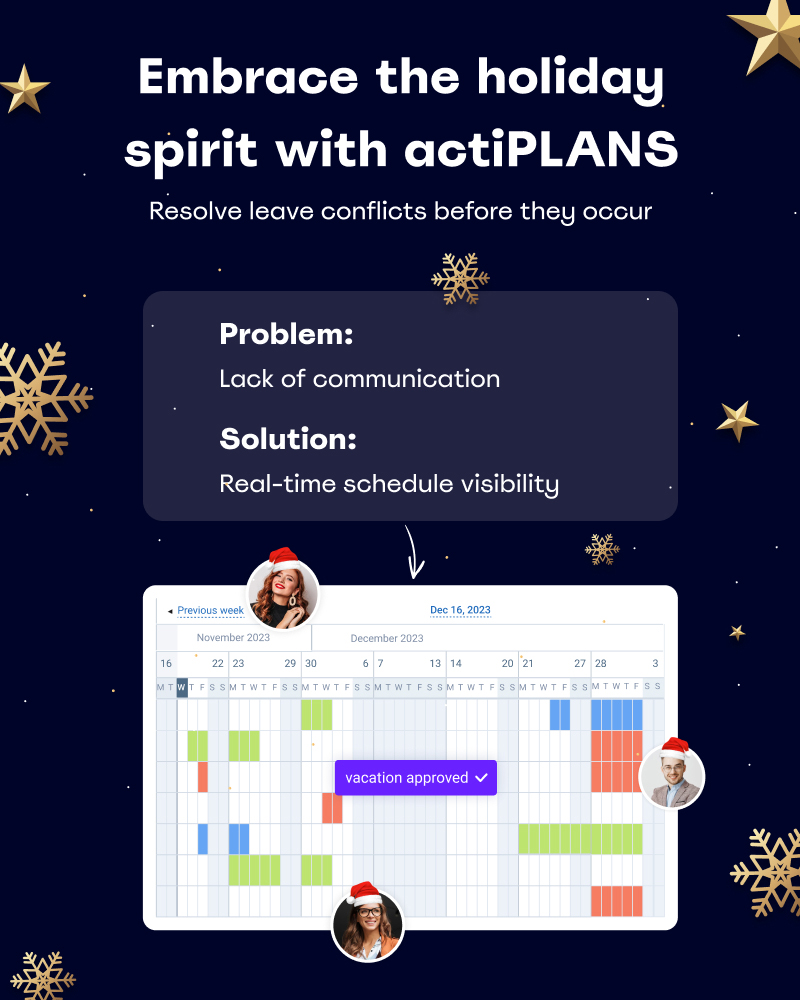
How actiPLANS can help
actipLANS lets team members view each other’s leave schedules, helping employees plan their PTO wisely and avoid conflicts by adjusting their leave requests if needed.
Cause #2. Inadequate staffing or resources
Next, when everyone is away and there aren’t enough hands on deck, teams end up competing for resources. This delays project completion and compromises the quality of work.
Solution:
- Check if all the upcoming projects are covered in advance.
- Avoid overburdening specific individuals or teams with excessive workloads.
- Use on-call backup staff or hire freelancers to reduce the burden.
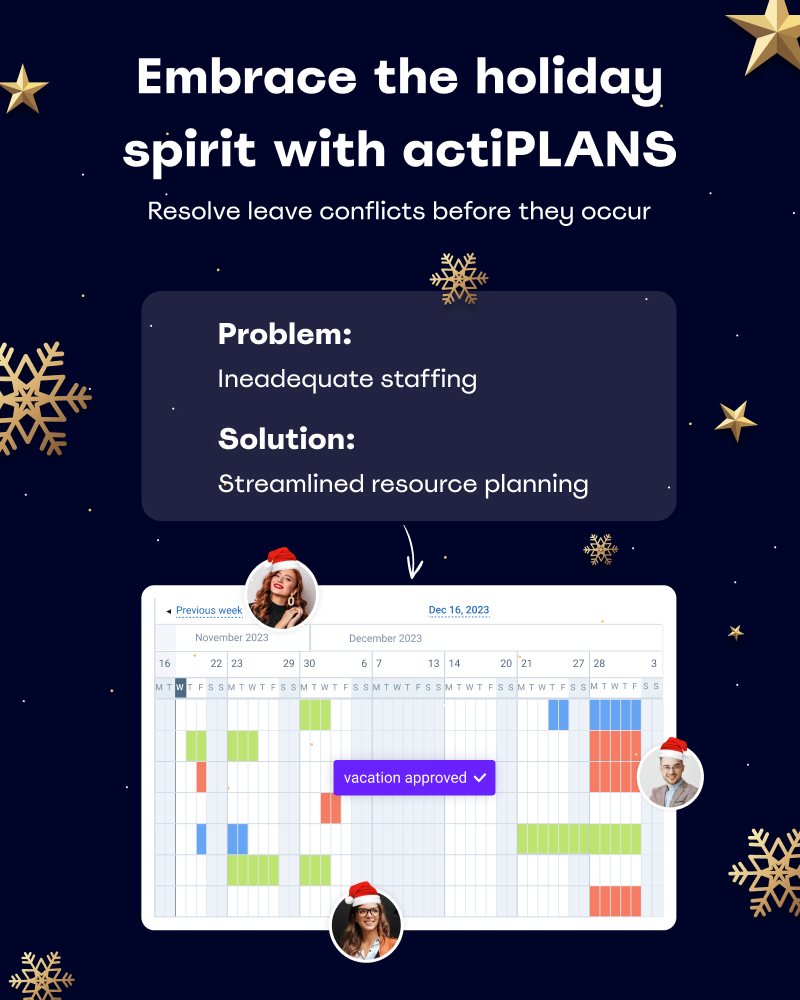
How actiPLANS can help
actiPLANS provides instant insights into employee availability. Managers can effectively allocate resources based on the leave schedules, preventing conflicts arising from insufficient staffing or resource availability.
Cause #3. Unexpected events or emergencies
Unexpected events like illnesses or accidents can pop up out of nowhere, and there’s no way you can prevent it.
With most employees taking leave before the holidays, finding replacements if someone takes sick leave can be tricky, so it just creates increased workloads for those who are still around.
Solution:
- Keep an eye on leave data to identify patterns and trends in the specific types of employee leave requests.
- Plan your projects and campaigns based on the trends you identify.
- Evaluate the risks associated with certain hiring or management decisions using the context of past project outcomes.
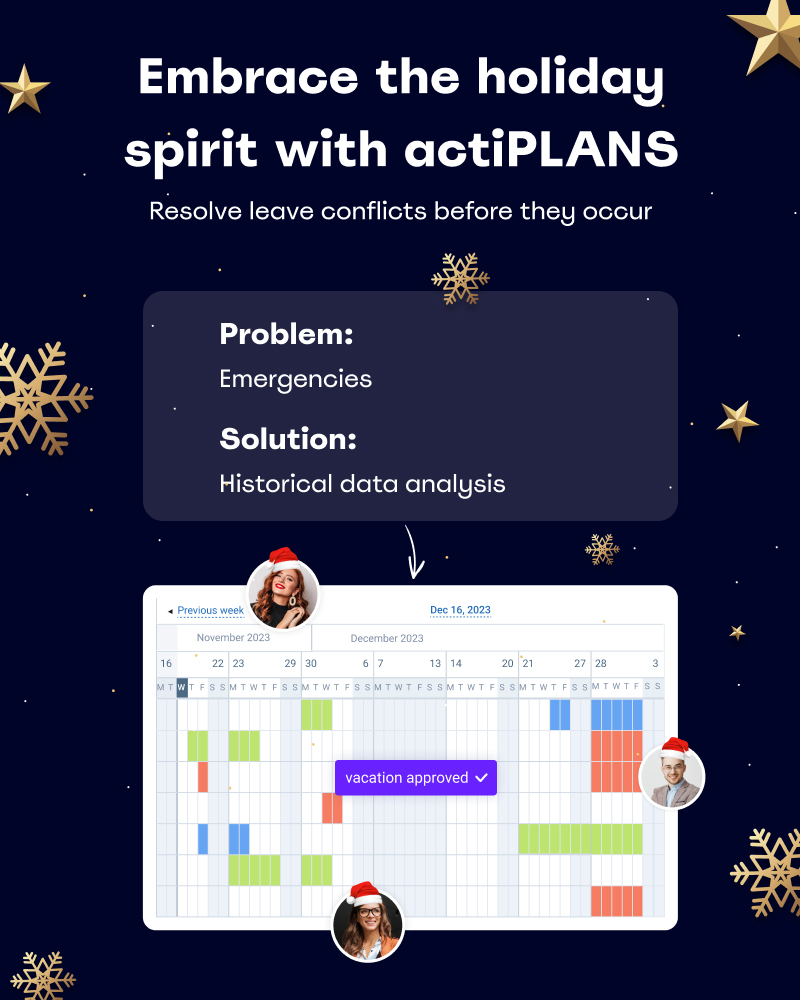
How actiPLANS can help
actiPLANS lets you reveal the departments or teams most affected by leave during specific periods, identify any disparities or imbalances in leave distribution among employees or teams, and more. These insights can help you encourage staggered leave schedules, ensuring adequate coverage and reducing the likelihood of conflicts.
Start your free 30-day trial today!
Cause #4. Overlapping priorities
In the modern work environment, it’s common for employees to have multiple responsibilities. However, as we’ve already said, too many projects or tasks leave team members feeling overwhelmed and can even lead to tension among colleagues as people strech themselves too thin in an attempt to please evaryone.
Solution:
- Integrate a task manager into your scheduling software.
- Regularly assess and distribute tasks evenly, considering employees’ capacities and availability.
- Allow buffer time between tasks or meetings to accommodate unexpected delays or emergencies.
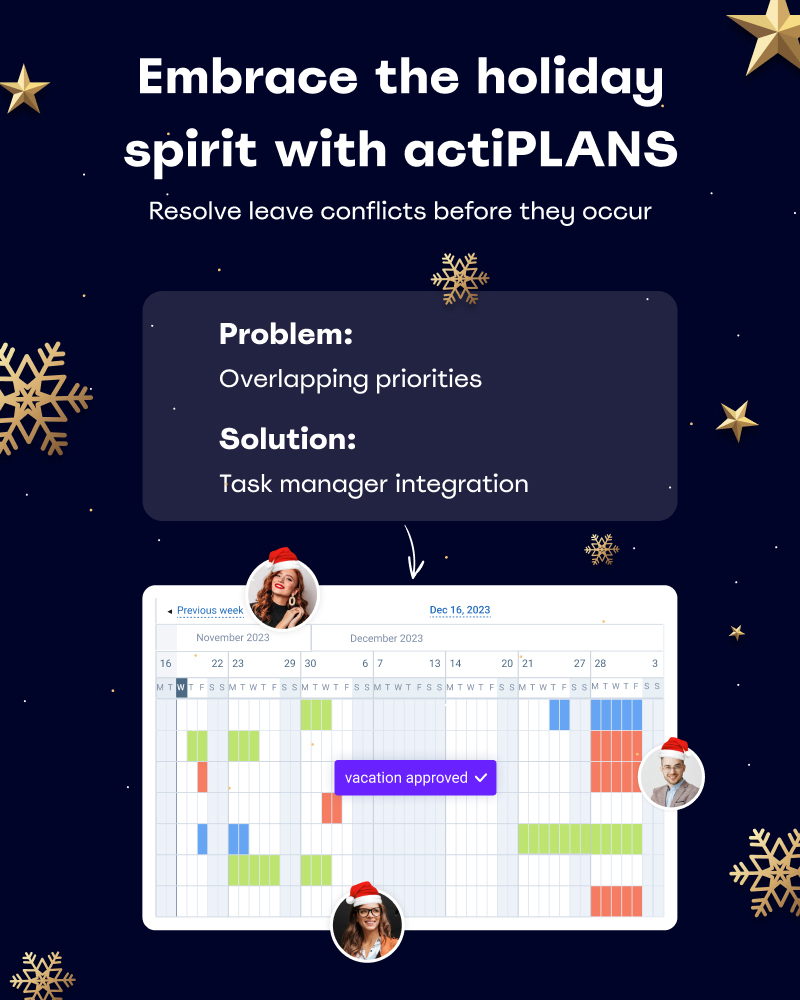
How actiPLANS can help
The integration between actiTIME and actiPLANS allows for real-time visibility into both employee availability and scheduled PTO. Managers can easily see an employee’s planned leave alongside their assigned tasks and projects, which helps in identifying potential conflicts between schedules and project deadlines and allows them to proactively reassign work or adjust deadlines to prevent delays and maintain productivity.
Start your free 30-day trial today!
Cause #5. Inefficient scheduling practices
Last but not least, inefficient scheduling practices also significantly contribute to scheduling issues.
Poor planning, lack of prioritization, and ignoring individual workloads result in wasted time and burnout; not to mention, it can put a damper on the overall festive mood within the organization.
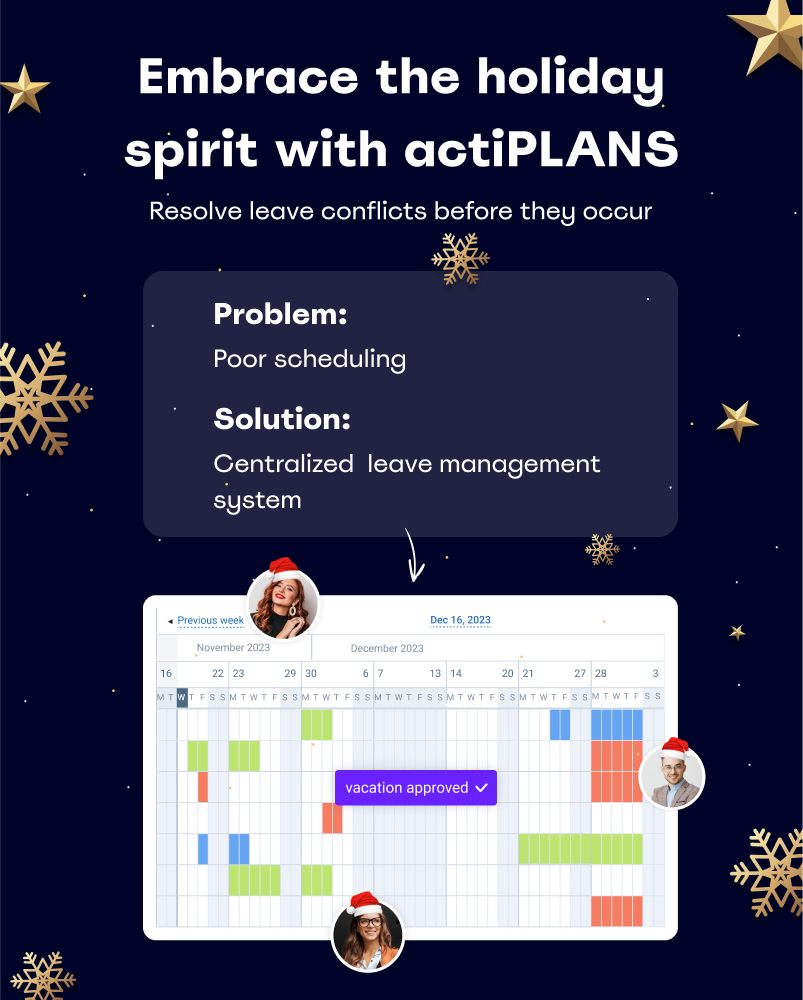
Solution:
- Utilize a shared calendar or scheduling software that everyone can access.
- Encourage employees to regularly review and update their schedules, mainly when changes occur.
- Use the PTO blackout option to ensure you are properly staffed when it’s most needed.
How actiPLANS can help
actipLANS provides a centralized platform for managing employee leave requests.
It automates request submission and approval processes, eliminating the need for manual paperwork or email exchanges and ensuring that requests are recorded accurately and in a timely manner.
Takeaway
As the holiday season draws near, now is the perfect opportunity to leverage technology and implement a system that balances employees’ well-deserved time off with the continuity of business operations. With actiPLANS as your partner, you can create a joyful and stress-free Christmas experience for everyone in your organization.